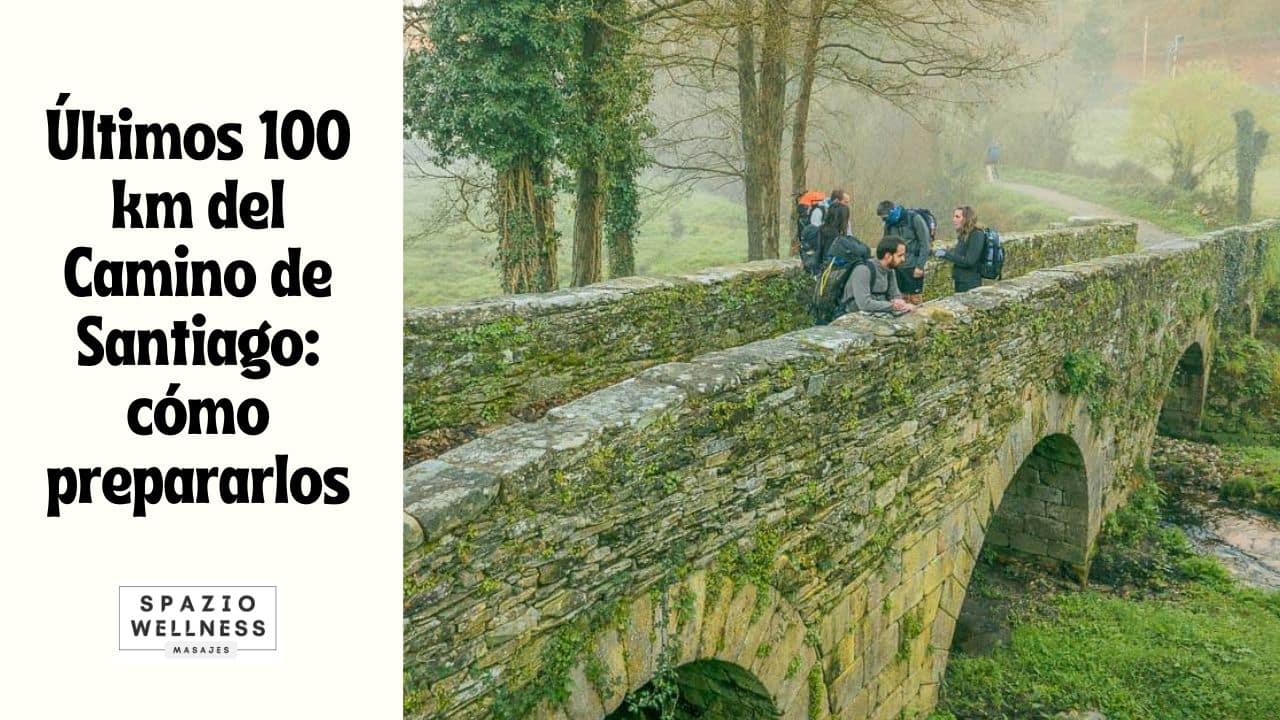
If you’re organizing your Camino de Santiago, you’ve sure got in mind these last 100 km of the Camino de Santiago. Are the stretch required to get the prized Compostela and, therefore, have become the focus of many pilgrims who have one week or less.
But if you have walked many hundreds of miles away or if this is your first time, you should know that this final stretch has its own dynamics. It is a period of high density emotional, and, at the same time, maximum physical wear.
Strategy to face the last 100 km of the Camino de Santiago
As an expert in the path and in the recovery of injuries, let me tell you something key: whether you’re preparing at home, or you’re ready to begin this stretch in Sarria Tui, your success and your enjoyment depend on the strategy applique. Below, I offer a comprehensive guide, from the planning to your arrival to Santiago.
Pre-preparation: planning the last 100 km before you leave
If you haven’t started down the Road, these tips for the final stretch you need to apply from today. This is not only to know how to walk, but to prepare your body for the accumulated fatigue that face.
1. Training: it simulates the load and the ground
To cope with the last 100 km of the Camino de Santiago, your training should be specific:
- training with the backpack: Never leave the path without having previously trained with the actual weight that you are going to wear. A few miles with the pack on several times a week are more valuable than a long walk without it.
- Simulates consecutive stages: Your body must learn to recover while still striving. Beam walks of 15-20 km in consecutive days. This will give you a real idea of how you will handle your body fatigue and pain knees last stretch and how they will react to your feet.
- Choose either the footwear: As we have said before, the footwear must be tamed. You’ll never have boots on the Way! You can hear more about it in this article on the care of your feet on the Road.
2. The choice of the route: you know the profile,
If you’re going to do the French Way from Sarria (the most popular for the last 100 km of the Camino de Santiago), keep in mind that the terrain can be varied, with quite steep at the beginning. If you opt for the Portuguese Way, although more plain, the exposure to asphalt can be a source of pain if you do not use appropriate templates.
Be realistic with your time. The hurry up is your worst enemy. Planning stages that will enable you to finish the walk before the time of maximum heat and take time for recovery.
Route: the daily care of in the final stretch
If you’re already on the Road and you just need that push, the management of fatigue becomes your number one priority.
1. Intelligent management of the walk
- a steady Pace, not to fast: press and Hold a speed that allows you to talk without gasping. The rush only serve to increase the risk of muscle strain and appear feared pain knees last stretch.
- Pause in the middle of the morning: Make a stop 15-20 minutes to stretch, eat and drink something. It is a respite mental and physical crucial.
- Used canes as always: I Repeat this advice because it is fundamental. The canes are not optional. On the descents, significantly reduce the load on your knees and ankles.
2. The battle against knee pain
The pains knees in the last stretch of the Road are, by far, the most common injury. Due to the combination of weight (backpack), impact (walking) and muscle fatigue that is not able to stabilize the joint.
- Stretches well quadriceps: The quadriceps muscle is often shortened and tightened by the walk, pulling the patella. Stretch this area at the end of the stage is a preventive measure excellent.
- Apply ice locally: If the pain appears, especially after walking, applied cold in the area. This reduces the inflammation and help you sleep better.
- Messaging for the backpack: If the pain is persistent, don’t be proud. Make use of the services of the transport rucksack. The most important thing is to get to Santiago de Compostela in terms of enjoying the city.
3. Feet: a special attention
In this final stretch, your feet are at their limit. A little rubbing can quickly become a big problem.
- Changing socks: it Takes a few extra and redeem them in the lunch break. A foot dry is a walk away happy.
- Treatment of blisters: I know toilet to treat them. If the blister is large, drains the fluid with a sterile needle, but never starts the skin, as it is the best protection against infection.
Arrival in Santiago and recovery: your next step
You have achieved the arrival to Santiago. emotion you flooded, and the photo in the Obradoiro is the golden clasp. But once the adrenaline dissipates, your body begins to ask bill for the last 100 km of the Way.
Do not make the mistake of ignoring the signs. Your next task is the recovery.
1. The rest is the beginning of the celebration
Dedicated the first evening to really relax. A hot bath (or cold, if you have a lot of inflammation and raise your legs up against the wall are simple gestures that initiate the process of decompression muscle.
2. Massage in Santiago: the best investment of the post-Road
, A drainage massage post-road is not a whim; it is a therapeutic necessity, especially after the effort you’ve made in the final stretch. of The muscles are fatigued, full of metabolic wastes and, probably, with some contracture latent caused by the backpack.
A good massage in Santiago de Compostela will do three things for you:
- Clean muscle:it Helps to drain toxins (lactic acid) accumulated, reducing the feeling of heaviness and pain.
- Strain relief: focusing on the critical areas: twins, back, quadriceps and trapezes (the area of the backpack). If you suffered pains knees last stretch, a good job of quadriceps and hamstrings will help to release them.
- Enjoy the city: To reduce the pain and heaviness, you’ll be able to explore Santiago, climbing stairs, and enjoy its taverns and monuments with the energy that you deserve.
Council of booking: We strongly recommend that you book a massage of recovery in terms of know your date of arrival to Santiago. specialized centers, such as ours, we are very much in demand by the pilgrims. If you want to find a hole and learn more about our specific approach, you can see the details of our “Massage of a Pilgrim”.
The Road is an experience from beginning to end, and the care of your body form part of that trip, especially in the last 100 km of the Camino de Santiago. Plan ahead, be cautious route, and treat your body the recovery it has been earned.
Have a good Journey and I hope in the goal!