The Camino de Santiago has been around for centuries a trip off the power and simplicity. However, at present, the technology on the Camino de Santiago has been integrated as a fundamental part of the experience for many pilgrims, both those who walk to the bike. Mobile applications and electronic devices have become key allies in the security, the planning, the comfort and cultural enrichment. Since the orientation of the path to the recognition of the flora and the fauna, the technology offers practical tools that complement each other, without replacing, the essence of the pilgrimage. From our massage center SPAZIO WELLNESS we are going to show you some of the most useful.
Technology and apps for the Camino de Santiago: essential tools for the pilgrim
Apps and navigation planning: your guide to digital
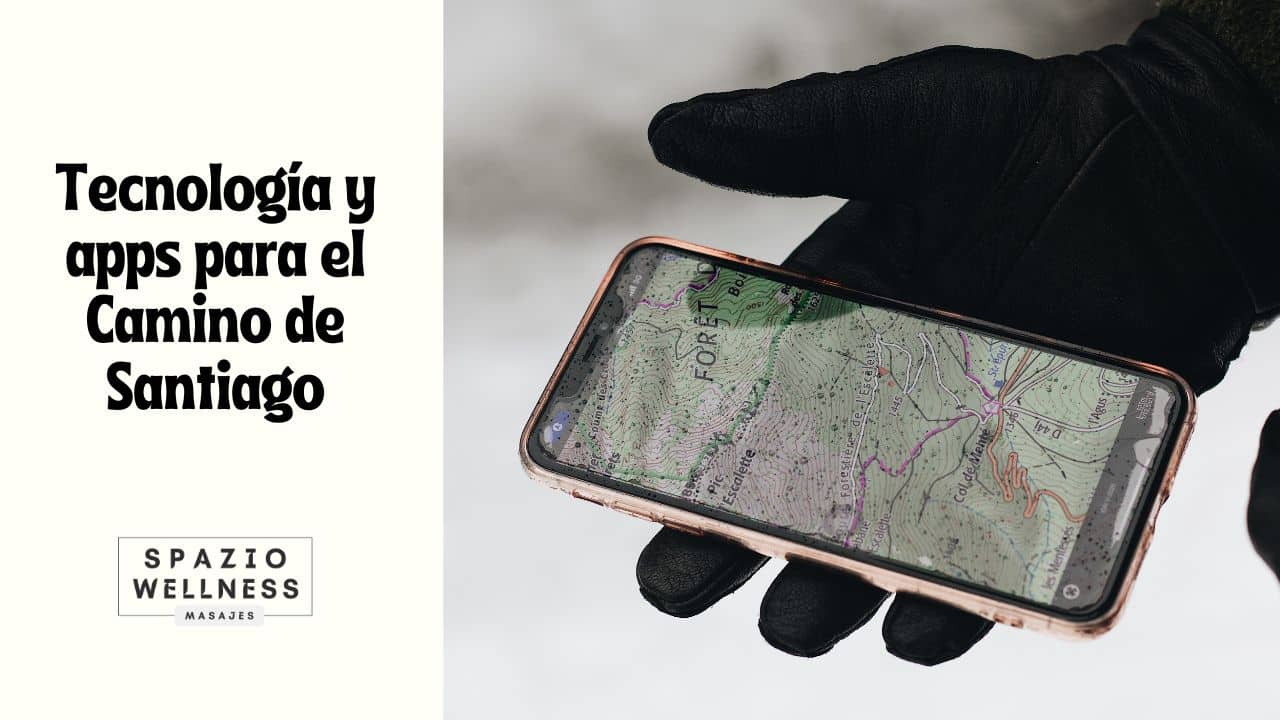
One of the greatest revolutions for the modern pilgrim is to have a complete guide in the palm of your hand. The apps for the Camino de Santiago have simplified the orientation and logistics in a way that a paper map can’t match. These digital tools allow you to navigate accurately, plan your days and get access to updated information about the route.
- For pilgrims to walk: Applications such as Gronze.com or a Good Way of Santiago guides are complete. Provide a detailed database of all the routes, with up to date information on shelters, services (shops, pharmacies, bars) and points of interest. Their maps allow you to see the elevation profile of each stage, which is invaluable for managing your effort. Its strong point are the maps without an internet connection, a crucial role in rural areas with little coverage.
- For cyclists (bike): those Who travel by bike often need alternative routes to avoid trails or technical sections with rocks. Apps like Wikiloc they are ideal because they allow you to follow routes created by the community of users, with tracks specific to bike. Komoot is another great option for cyclists, as their route planner allows you to filter by type of terrain (asphalt, dirt, etc) and see the surface of the route in advance, which help you to prepare your bike and your stage. In addition, the rider can use a phone holder on the handlebar in order to have the navigation provided to the view.
The use of these applications gives you the security of not to miss and the peace of mind of having the information you need at your fingertips.
Apps for culture and heritage: your interactive museum in
The Road is a lot more than walking, is a journey through the history and the art. Technology now allows you to be your own guide cultural, using the camera of your mobile to discover the secrets of every place.
- For art and history: beyond the applications of maps, there are tools dedicated to visual recognition. , Google Lens it is an excellent starting point. When you point the camera of your phone to a historic façade, a monument or a mural, you can recognize it and give you instantaneous feedback on your story and style. For an experience more specialized, you can search for apps like Smartify, a kind of Shazam for the art, which recognizes works in museums and exhibition spaces and provides you with audio guides detailed. Although the Road is not a museum, the information that these apps can offer about the heritage in churches and towns is fascinating.
Apps for nature: an herbal guide and fauna in your pocket
The landscape is a fundamental part of the experience, and the technology allows you to interact with it in a deeper way. With your phone, you can identify the natural species, that you find on the way.
- For plants and trees: Applications like PlantNet and PictureThis they are perfect for those who enjoy the botany. Using the camera of your mobile, you can make a picture of a flower, a leaf or a tree, and the app will tell you its name, its features and whether it is a native species of the area. It is a fun and educational way of getting to know the flora of the route.
- For the birds: The application Merlin Bird ID developed by the Cornell Lab of Ornithology, is an indispensable tool for the bird lovers. You can identify the species over a photo or, even more amazing, recording your singing. The app analyses the sound, and suggests the birds may be singing about.
- To rocks and minerals: If you are interested in the geology, the implementation Rock Identifier allows you to use the camera to identify different types of rocks and minerals that you find along the trail.
These digital tools allow you to enrich your experience with the natural and built heritage of the Way, making every stop on an opportunity to learn something new.
Gadgets for health, performance and security
The Way it is a physical challenge, and the technology in the Camino de Santiago provides tools to monitor your body and optimize your performance, both on foot and by bike.
- For walkers and cyclists: The smartwatches and wristbands activity they are very common. These gadgets to record the number of steps, distance traveled, calories burned and sleep quality. For cyclists, can record the average speed and pace. This information is useful to plan stages realistic, avoid overexertion and make sure that the body is recovering properly.
- Specific to cyclists: A computer it is a gadget essential. Devices such as a Garmin or Wahoo offer accurate tracking by GPS in your route, speed, cadence and heart rate. In addition, most of these major players can be synced with your phone and apps like Strava to analyze and share your performance. For safety, a set of bike lights with long-lasting battery is essential.
- General security: A flashlight front it is an electronic device essential for the security of all pilgrims. Many choose to start walking or cycling before dawn to avoid the heat. A headlamp frees your hands and allows you to see the road clearly in the darkness. Choose one with a good battery life, and several modes of lighting.
- Portable power: The intensive use your phone for navigation, communication and photography depletes the battery quickly. An external battery or power bank it is a must-have accessory. With a capacity of 10,000 mAh or more, you can recharge your mobile several times. For a total autonomy, some pilgrims are opting for solar panels portable, which can be attached to the backpack or the trunk of the bike and charge devices while you’re on the move.
Technology for communication and the photograph
even Though the spirit of the Path is disconnected, the reality is that the contact with the outside is important for the majority of the pilgrims. The technology makes this connection more easy and smooth.
- The mobile phone as the primary tool: The smartphone is the centre of technological expertise. It is used to communicate with family and friends via apps like WhatsApp, to make photos and videos, and access to the information of the apps on the Road. It is a swiss army knife of digital condenses multiple functions in a single device.
- Action cameras (GoPro): although the camera of the mobile phone is very powerful, some pilgrims prefer to document your trip with a dedicated camera. The action cameras they are perfect for their resistance to water, shock, and by its ability to record videos in immersive, from different perspectives, such as mounted on a helmet or on the handlebar of the bike.
- Wireless headphones: The Road is a place of silence and reflection, but many pilgrims enjoy music or podcasts while on the trek. Some wireless headphones lightweight and comfortable they are ideal to listen to audio without disturbing others, and without be caught up with cables.
The key: finding the balance,
The debate over the technology and the Way of Santiago is not in whether or not to use it, but how to do it. The key is that the technology to be a tool at the service of the pilgrim, not a distraction that you apart of the experience.
- Using technology with intention: you Use the application to plan, navigate, and ensure your safety, but don’t let the phone keep you from looking at the landscape or to engage in a conversation with a co-route.
- Set limits: Many pilgrims decide to save the phone during the hours of walking and use it only when you reach your destination to plan for the next day, or talk to the family. This allows one to live the present moment.
- Values tradition: Although the digital maps to be more accurate, the yellow arrows and the shell of st. james is still the heart of the orientation of the Path. Combining technology with tradition is the best way to honor the history of the route.
Gadgets and apps not only make the pilgrimage more comfortable and safe for all, but also allow for a more efficient scheduling and a greater cultural enrichment and natural. The key is to use these tools with wisdom, so that the trip remains a personal experience, thoughtful and, above all, human.